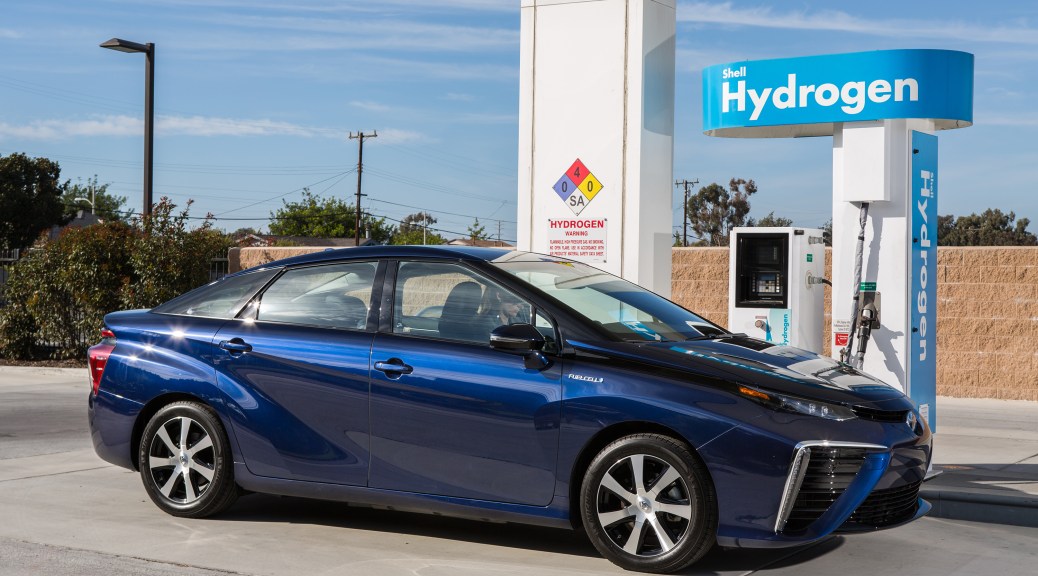
It’s a bold claim to say that an automaker has developed the future. To make our lives easier, Toyota has done this itself. Introducing: the 2015 Toyota Mirai—which means “future” in Japanese.
Toyota isn’t bluffing with the pretentious name, either. The Mirai is the successor to their FCHV-adv project, and is a hydrogen fuel cell-powered electric vehicle. Toyota claims that their new model can travel 300 miles on a full tank of hydrogen and will only take five minutes to refuel. The five minute wait is not unbearable when you realize that Toyota will supply complimentary hydrogen fuel for nearly three years. Mirai owners will not have to worry about where they will spend that five minutes refueling, either; soon, there will be “hydrogen highways” installed throughout the Northeastern United States to help introduce the new model. Those owners also will need not worry about their car’s harmful emissions. Instead of carbon dioxide, the Mirai will only emit water vapor. The most amazing part: if you look in the corner of your screen, you’ll see that today’s date isn’t April first.
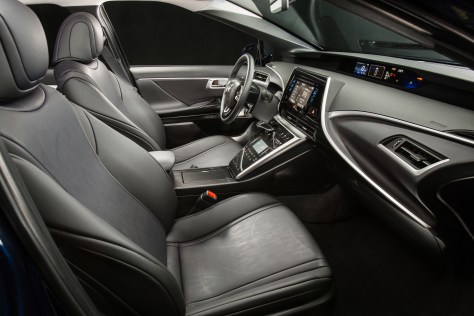
Toyota had to make the Mirai seem realistic, so they released its performance specs. In reality, a 9 second 0-60 time is reasonable for a vehicle that utilizes a new fuel source. The Mirai is a car dedicated to the future—not short-run performance—and that is the only image that Toyota is trying to create. The power unit will provide 153 bhp, which is slightly less than what one would get in a Camry. The body curves on the Mirai are much more drastic than on its beige compatriot, possibly in an attempt to make the car more futuristic.
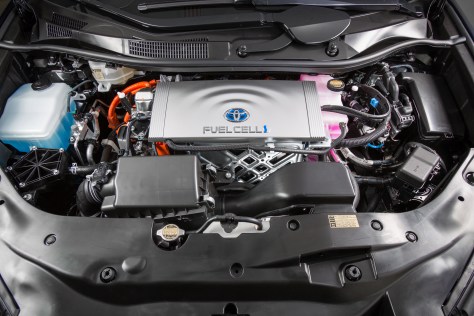
Although Toyota has not been very open about discussing the fuel cell, there are assumptions that can be made about its form. Fuel cells combine hydrogen and oxygen in the presence of a metal—such as platinum—and utilize oxidation-reduction reactions to release electricity and water vapor. Toyota is using platinum for their cells, even though it is a relatively rare and expensive metal. Sources at Toyota say that they are modifying the platinum to make it more efficient, lowering the cost of the fuel cell.
It is safe to say that a majority ofthe people that will buy Toyota’s new model will do so because of the reduced emissions. As stated earlier, the Mirai’s power unit will emit water vapor instead of carbon dioxide. While this sounds like an amazing feat, water vapor is more of a contributor to the effect of greenhouse gases than carbon dioxide. There is current research underway to see if pumping water vapor into the atmosphere can decrease the total amount of greenhouse gas; if this is deemed successful in the upcoming years, Toyota’s success will increase dramatically. Dealerships will be full of people trading in their Prius for a car that helps reduce the effect of greenhouse gases. This might not be such a bad deal, as the MSRP for the Mirai will be $57,500 (although Toyota claims that, due to government incentives, this price could drop by up to $13,000). This also pays for Toyota’s “360-degree Ownership Experience,” which includes an eight-year/100,000-mile warranty on the fuel cell.
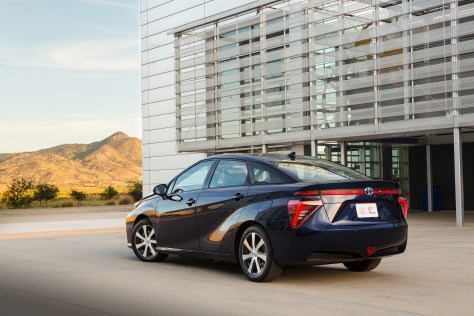
In the modern era of the automotive industry—in which electric cars are sprawled along the streets of Beverly Hills and the most insane hypercars are hybrids—there is a clear shift in mentality regarding a car’s source of power. More automakers have started to question the necessity of gasoline-powered vehicles; Toyota has been one of those automakers, and—as the biggest of the big dogs—it is able to take a big step into the mirai.
You can follow us on Twitter @Petrolholics
 Petrolholics